

Some diseases of horses are spoken about in dreaded tones
Colic would surely rank as the most feared, followed perhaps by COPD/Equine Asthma. Skin conditions are considered to be in a lesser category of severity but can nonetheless be extremely detrimental to the horse’s wellbeing and function. Probably the most common skin diseases seen in Ireland and the UK are the ‘buy-one-get-one-free’ duo of Mud Fever and Rain Scald. Both these conditions are caused by the same infectious agent, a bacteria called Dermatophilus, giving us the single veterinary term for both these conditions; ‘Dermatophilosis’.

This bug is thought to be a commensal organism of the equine skin. This means that it survives as a passenger on equine skin quite harmlessly, prevented from invading into the deeper layers of the epidermis by the natural barriers and immune defences that healthy skin possesses. It is only when these defences are lost that the organism can begin to multiply and cause disease. In almost all cases the cause of the breakdown of skin defences is continued soaking with water or wet mud. This causes maceration and softening of the skin allowing the organism access to deeper layers where it can multiply in an uncontrolled manner.
Rain Scald
In this form of the infection, soaking of the skin via heavy rainfall allows the bug to take hold in areas where the water has run off the upper parts of the horse’s body, usually the rump but also the back and flanks. A horse which stands with its head out of a stable half-door can also get the infection on its face. Even one heavy prolonged soaking, eg in a thunderstorm, can lead several days later to signs of dermatophilus infection on the rump. Crusty scabby lesions can be felt on the affected area, which if picked off and examined are seen to be small dry scabs with a fringe of hairs poking out. These are the classic ‘paintbrush’ lesions of the condition and are generally enough to enable dermatophilus to be diagnosed with certainty. A mild case of Rain-Scald in the summer may resolve without any treatment, but more severe infections may require owner, or even veterinary, intervention.
Mud Fever
This is the name given to dermatophilus affecting the lower legs, particularly the heels and pastern areas. Hind legs are often more severely affected. In this manifestation, the dermatophilus infection can cause more severe lesions, with coalescing crusts hiding pus underneath. Continued wetting and chilling of the lower legs is the primary cause of the skin damage which then allows the bacteria to become established. It is often seen that horses which live outside all-year round do not develop this condition, and it is thought that the regular leg-washing of horses that are turned out during the winter months is the main predisposing factor rather than the mere presence of mud on the lower limbs. Other factors can predispose for mud fever. Spiky vegetation in a pasture will scrape and damage the skin’s integrity, leg mites (Chorioptes) cause irritation and self-trauma, and sand from the arena can act as an abrasive.
Management of Mud Fever and Rain Scald
Removing the scabs, exposing the dermatophilus bacteria to oxygen and topical medicines is beneficial. This is often painful and can be facilitated by soaking the scabs with a wetting agent. In severe cases aqueous cream can be bandaged on and left overnight. Once the scabs are removed topical antiseptics such as chlorhexidine or silver sulphadiazine are applied. In some patients sedation will be necessary. If mud fever becomes established in a lower limb, other bacteria may become involved and the condition may worsen, causing a septic infection of deeper tissue, (cellulitis). This will require treatment with systemic antibiotics, usually penicillin by injection.
Prevention of Mud Fever
Reducing wetting of the lower legs is key. Do not wash the legs after each turnout/exercise. Wait for the mud to dry and remove with a soft brush. If the leg is wet, dry with a soft towel or even use a hairdryer set on a cool temperature. The use of barrier creams such as Hydrous Wool Fat on the lower legs can be useful to repel water and provide an antibacterial barrier, but these must be used only as a preventative on healthy skin, never on already infected legs.
Summary
Mud Fever and Rain Scald, though common, are complicated and multi-factorial conditions. It is even thought some horses may have a genetic predisposition to the infections, given the variation in severity of cases. Good management, preventative measures and early diagnosis and treatment are usually enough to keep the conditions from becoming debilitating though veterinary attention will be necessary in a minority of cases each winter.
John Henderson MRCVS
For product information to support skin dermatitis please go to derbymed’s horse care products here
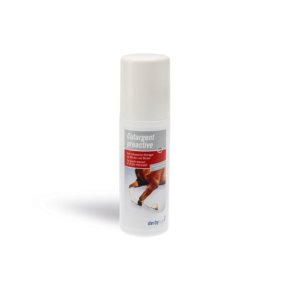
CUTARGENT PREACTIVE 200ML
Cleansing spray to use before Cutargent to soften the skin and remove scabs
Cutargent Preactive is the first step in the successful treatment of pastern dermatitis. It is a cleansing spray for the gentle removal of scabs and crusts caused by mud fever and rain scald, the most common forms of skin dermatitis (in the UK and Ireland).
Once applied, the soaked scabs can be removed carefully without causing bleeding and injuring the skin, and prepares the skin for anti-bacterial and anti-septic treatment.
We recommend, the use of derbymed’s Cutargent foam cream.
derbymed’s Cutargent Preactive

CUTARGENT 300ML
Foam cream for the care and regeneration of damaged skin, particularly pastern dermatitis or mud rash.
Cutargent Foam helps with the regeneration of damaged or irritated skin, particularly in cases of pastern dermatitis and its most common conditions mud fever and rain scald. Its unique patented technology contains Panthenol, Madecassoside and Microsilver. These specially selected ingredients accelerate healing and reduce itching. Panthenol improves the skin’s elasticity, supports the regeneration of skin cells and soothes itching. Madecassoside boosts collagen synthesis and activates cell regeneration of the skin surface.
Cutargent is an ideal product for supporting horses with pastern dermatitis. A unique patented foam cream allowing for easy and accurate application on the skin. (300ml spray bottle gives 7-9 litres of foam).
derbymed’s Cutargent.


