

Have you got your mare in peak condition for breeding?
With Spring afoot and the breeding season well and truly in our crosshairs, we look at a number of factors that contribute to the success of a breeding program. Pre-breeding management plays a pivotal role in ensuring the optimal conditions for conception and a healthy pregnancy. Whether you’re a seasoned breeder or embarking on your first breeding endeavour, understanding and implementing effective pre-breeding management practices can make all the difference in the outcome. The primary goal is to achieve a successful pregnancy as quickly as possible with minimal fuss and ensuring a healthy embryo that will develop into a foetus and next years’ offspring. Let’s take a look at some of the factors that should be taken into consideration when developing a pre-breeding strategy.
The nutritional needs/requirements of a mare should not be overlooked in the pre-breeding period. Ensuring that a mare is in optimum condition, i.e. not too thin or overweight, is an absolute necessity as these mares can potentially experience difficulties conceiving or maintaining a pregnancy. A mare, like a competition horse, will need an appropriate balanced diet that is rich in essential nutrients, vitamins, and minerals. It is also worth noting that should your mare conceive and maintain a successful pregnancy, that the diet will likely need to be adjusted at various stages throughout gestation. For more information on broodmare nutrition, have a look at one of our previous expert articles here!
A comprehensive veterinary examination should always form part of a pre-breeding program, as it is important to determine if she is having regular cycles and to identify any anomalies at an early stage. This exam may include (some or all) the following:
- Examination of the external genitalia and mammary gland.
- Examine vulval confirmation and assess for risk of a pneumovagina (Air present in the vaginal cavity).
- Palpation and ultrasonography (per rectum) of the internal genitalia.
- To determine the size and consistency of the uterus.
- View of the ovaries and assessment of follicular activity.
- Speculum examination of vagina.
- Swabs if necessary for evaluation of cell type and for the presence of any pathogenic organisms, such as bacteria.
Remember that mares are seasonal breeders and as such will be influenced by the number of hours of daylight (and increases in temperature) they are exposed to. In some situations, artificial lighting will be used to manipulate this as the typical natural breeding season is from April (maybe March in a good year) until September. Successful use of this artificial lighting can trick the mare into thinking it is springtime and so cycling earlier in the year.
For most of us, we will probably have already selected a stallion to go with a specific mare. With ever improving technologies there are many more options available to us as breeders rather than merely a natural covering. AI and embryo transfer have certainly provided us with a much greater selection and a wider genetic pool to choose from. Regardless of the means of insemination, it is vitally important that our mares are cycling properly and we can identify were she is in terms of her own individual cycle.
Good dental health is important in horses at all stages. Broodmares are no different and should not be ignored. A regular check-up is essential to identify any potential problems at an early stage and prevent hooks, or other dental issues from developing. The oral cavity is the first stop in the digestive process and therefore key to maintaining a good body condition.
That old saying of “No foot, no horse” is particularly true when we think of our breeding mares. Remember that a broodmare will be expected to carry the additional weight associated with a foal. Subsequently, they are at a higher risk of developing problems such as stress cracks or even laminitis. Starting the breeding season with good quality hooves, maintaining regular hoof trimming, exercise, and an appropriate diet can help to avoid the development of such issues in the broodmare particularly as she approaches her foaling date.
Protecting your mare from infectious diseases is essential for a successful breeding program. Specific vaccination protocols may vary somewhat depending on individual circumstances, breeding operations, or regional considerations, those include:
- Tetanus: mares should receive routine vaccination against tetanus to ensure immunity against this bacterial toxin found in soil, manure, and other environmental sources.
- Equine Influenza: a highly contagious respiratory disease that can spread rapidly among a cohort of horses. Routine vaccination plays an important role in reducing the risk of infection and minimizing any potential outbreak.
- Equine Herpesvirus (EHV): vaccination against specific strains of EHV, particularly EHV-1 & EHV-4, is often recommended for breeding mares to help prevent abortion caused by these strains and reduce the risk of respiratory disease. It is recommended to vaccinate your mare for EHV during the 5th, 7th and 9th month of pregnancy.
- Strangles (Strep equi): this is a highly contagious bacterial infection that affects the respiratory tract and lymph nodes of horses. It is not always included as a routine vaccination schedule but may be given in areas where disease is prevalent or there is a greater risk to the mare.
A routine worming program may not be necessary for each and every mare. Good management of both animal population and pasture can keep a worm burden to a minimum. Regular faecal egg counts are more important than unnecessary treatments. Not only will this result in mares only being treated when necessary, it also assists with the ever increasing risk of resistance. Faecal egg counts can identify the type of parasite present and also quantify the numbers present. This will typically be expressed as “eggs per gram”. It is important that if a faecal egg count results in a mare requiring treatment, that a follow-up test is performed to assess both the effectiveness of the treatment and to monitor the mare’s parasitic burden.
In conclusion, proactive pre-breeding management is key to optimizing the reproductive potential of your mare and ensuring successful breeding outcomes. By prioritizing her health, nutrition, and general well-being, it is possible to enhance the likelihood of a healthy pregnancy and the birth of a thriving foal.
Written by Ian Rountree MVB
All of our products to support your broodmare during the breeding season are available in our Breeding product range.
In particular, Fertility was specially developed by derbymed to support the fertility of breeding horses and contains a unique composition of dry grape extract.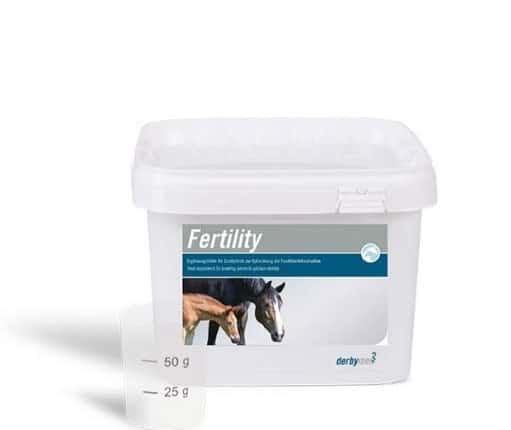
Key benefits:-
- Minerals and vitamins for a healthy pregnancy
- Supports the mare‘s heat
- Supports the implantation of the egg
For more info go to Fertility.


