
 Nurturing Hope: Guidance on the Care and Maintenance of Orphaned Foals
During the breeding season it is important to be prepared for any situation. One of these is the possibility of an orphan foal. In some cases a foal will be orphaned due to the death of the mare or poor mothering. Sometimes though, the mare can be healthy and keen to nurse her foal, but if she is not producing enough milk or the foal is unable to suckle, then these newborns will also be treated as orphans.
Orphan Foal’s First Milk: The Role of Colostrum
Orphans are high maintenance and require attention every two hours or more in the first few weeks of life. The primary concern is that the foal receives colostrum. Colostrum contains antibodies -proteins that fight pathogens. Foals are born with no infection-fighting antibodies, so they are entirely dependent on getting these from the colostrum. These will help protect the foal from bacteria and viruses in the environment and are key to helping build their immune system.
If possible the mare is milked to get sufficient colostrum. If this is not an option or if the colostrum is poor quality then an alternative source must be used. Frozen colostrum can last up to 12 months in the freezer and can be defrosted using tepid water. Another option is colostrum taken from another mare in the yard. This has the benefits of being fresh and the antibodies will be more specific to the local environment.
It can also be wise to have some powdered colostrum as a back-up. Although not as beneficial as the real thing it does contain some antibodies and other nutrients needed by the foal during this critical stage. It is vital to get the colostrum into the foal in the first 8-12 hours as this is when it is best absorbed by the gut. Basically fresh, frozen or powdered, any form of colostrum better than none.
Importance of Milk Replacement Powder for Early Developmental Growth
Once this hurdle has been overcome the next step is to source a good quality milk replacer powder. Orphaned foals should receive 20-25% of their bodyweight in milk per day. A milk replacer powder should contain fats and energy sources to fuel the foal’s rapid growth. It should also contain the vitamins and minerals present in mare’s milk.
Feeding large quantities of milk in a single sitting should be avoided as this can overwhelm the foal’s digestive tract. Little and often is key and one of the best ways to do this is to feed it in a bucket. A small amount of milk should be placed in a bucket (enough so the muzzle can easily reach the bottom). When the muzzle makes contact with the base of the bucket, the suckling response is initiated, and most foals will drink willingly. To begin with, no more than 1.5-2 litres should be offered at a single feed.
Nanut Foal is specifically designed to support orphaned foals, or foals needing supplemented with more milk than the mare can produce. It is a unique formula and contains multiple fat and energy sources which allow for better digestion and help prevent scour. (Skimmed Milk Powder, Whey Powder, Palm Veg oil, coconut veg oil). It contains all the vitamins and minerals found in mare’s milk and helps produce a steady rate of growth. The feeding amounts are indicated on the feeding chart and vary with the age and weight of the foal.
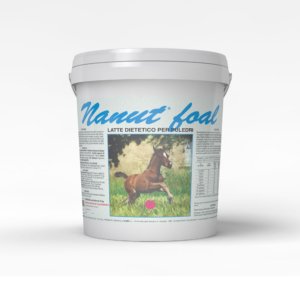 Nanut Foal 10KG – High quality powdered milk replacer
Nanut Foal is a complete milk substitute which has been veterinary formulated to support the rejected or orphan foal or for foals who are not receiving adequate milk supply from their dams. It contains a high level of essential amino acids, vitamins and minerals along with the highest quality milk proteins to support steady, correct growth and development. For more information go to Nanut Foal.
Milk pellets
Foals raised on milk powder should be offered a high-quality milk pellet from 3 weeks on. Primolatte milk pellets are an excellent choice. They are made up of 60% milk protein and 40% cooked cereal. They have a high calorie and protein level (19%) which supports this period of growth and development. High in vitamins and trace elements, it also has high levels of yeast to help support the hindgut health. Primolatte pellets can be dissolved in the reconstituted NANUT milk at a rate of 50 g per litre of milk. From the fifth week, continue the liquid diet, with PRIMOLATTE available at the quantities indicated in the feeding table.
 Primolatte 20KG– Pre-cooked feed for young and weaning foals
Primolatte has been developed to support orphaned foals, the offspring of dams that produce inadequate milk, or foals of weaning age. It helps mitigate against deficiencies and dietary imbalances that can cause developmental orthopaedic diseases (DODs). For more information go to Primolatte


