
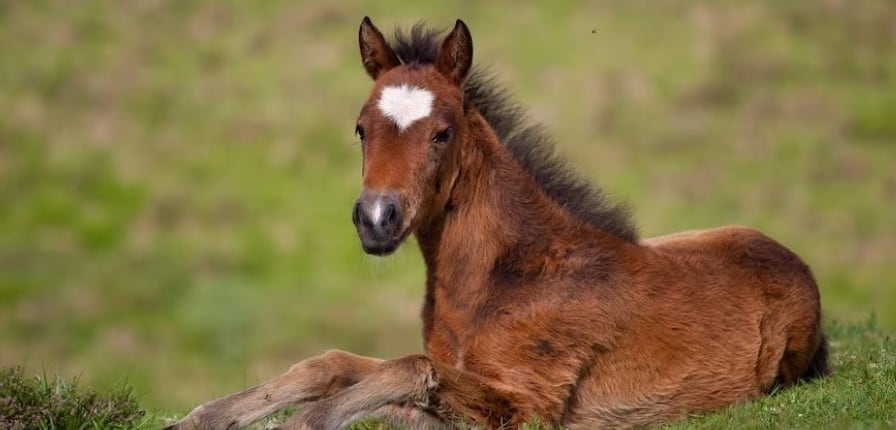
Equine Scour: A Pervasive Condition Common in Young Foals
Diarrhoea, commonly known as ‘scour’ is an extremely common clinical condition in foals and is seen at all ages from 6 days to 6 months. Scour is not a single clinical condition however, merely an indicator that there is some upset in the foal’s digestive function, which could have one of many causes. While it can be very difficult to unravel the exact cause of many cases of foal diarrhoea, most are mild in terms of clinical severity and the foal will recover with sensible care and management. If, however we have very sick foals, or multiple foals affected, we need to attempt to fully diagnose the cause in order to prevent further cases.
Causes of Diarrhoea

Foal Heat Diarrhoea
The commonest diarrhoea syndrome is also the most misunderstood. In this condition foals have a transient scour lasting a few days but are not unwell and continue to suckle as normal. This is seen from 5 – 15 days after birth and often coincides with the mare’s first oestrus, or ‘foal heat’. This scour, familiar to anyone who regularly breeds horses, has always been blamed on hormonal changes in the mare’s milk around this first cycle. It is now known that this is completely untrue.
The diarrhoea at this time is caused by changes in the gut bacteria of the foal, which lead to a digestive upset. Foals can often be seen ingesting some of the mare’s dung prior to this diarrhoea developing. This is a normal instinct which helps to ‘seed’ the foal’s intestine with the bugs needed to ensure an effective digestion. The name ‘foal heat scour’, however misleading, is not going away any time soon, so I suppose the assumption that it is related to the mare’s first cycle will persist.
This scour generally does not need treatment and will self-limit in a few days.
Rotavirus
This virus is the most common infection causing scour in the UK and Ireland. It affects foals from a few days to a few months of age, causing a diarrhoea of varying severity. In most cases the foal stays reasonably bright and basic supportive treatment is successful, but in severely affected younger foals the diarrhoea may be life-threatening. Rotavirus is highly contagious, so outbreaks on breeding establishments can be seen. In these cases, attention to biosecurity and hygiene is vital to prevent spread. Veterinary involvement will be necessary if the foal is sick and diagnosis of rotavirus as the causal agent is made through laboratory analysis of samples of the scour. There is a vaccine available against rotavirus where the mare is vaccinated during pregnancy on 3 occasions – the 8th, 9th, and 10th months. Protection for the foal comes from the mare’s colostrum.
Bacterial Infection
Bacteria such as Salmonella, E.coli and Clostridium occasionally cause scour though much less commonly than rotavirus. Symptoms range from mild to extremely severe, especially if the foal is very young. Diagnosis is made via faecal culture of the organism involved and the vet will instigate a treatment plan based on the results. Again, biosecurity and hygiene are of the utmost importance.
Worms
Worms of the species Stongyloides infect foals by ingestion through the mother’s milk. In foals 1 – 2 weeks of age, large numbers of these worms can cause a scour. Due to worming regimes in place on most breeding establishments, it is thought that this is now an extremely uncommon cause of scour. Diagnosis is made via faecal analysis for large numbers of worm eggs.
Cryptosporidium
This is a single-celled parasite which is occasionally implicated in outbreaks of scour in foals under 3 weeks of age. It is not a major issue on most farms.
Management of Scour
 As we have seen, most cases of scour will be short in duration and the foal will recover uneventfully. As a diligent owner however, we need to keep a close eye on the scouring foal to ensure it is still feeding and remaining reasonably bright and happy. If we suspect the foal is dull, checking the rectal temperature is a good place to start, as either a fever or a low temperature may signal deterioration in the foal’s condition. If the scour is persistent yet the foal is still quite well, the use of an intestinal adsorbent is justified. These can help absorb some of the nasty substances in the foal’s gut and bulk up the scour by absorbing liquid and gas, producing a more normal dung which helps stop the foal straining uncomfortably and scalding its hind quarters. Activated charcoal is an effective adsorbent for this purpose and may be used with veterinary advice.
Veterinary attention should be sought if the foal becomes unwell. The vet will assess the level of dehydration and administer fluids orally, or in more serious cases, intravenously. Samples of the scour will be sent to the lab to try to achieve a specific diagnosis of the cause. Depending on the case, various medicines such as antibiotics, anti-inflammatories and anti-ulcer treatments will be used.
John Henderson, BVM&S MRCVS
Our recommended product for managing scour in foals is Charcovet Gel. It contains 30g of activated charcoal in a 60ml syringe.
 It is an activated charcoal gel that is given as a complementary feed to support recovery from digestive disturbances in foals. Activated charcoal is a 100% natural, non-antibacterial, non-medicinal material with well known abilities to aid a return to normal gut function in many species.
Charcovet Gel is presented in a 60ml syringe, with a measuring dial.


