

Cushing’s Disease, Equine Metabolic Syndrome and Equine Laminitis
In a previous piece on laminitis, I described how the most common cause of this debilitating condition is Equine Metabolic Syndrome (EMS). In this article we will look at another laminitis-causing disorder, Cushing’s Disease, which is often confused with EMS, but is a separate clinical entity.
What is Equine Metabolic Syndrome (EMS)?
Equine Metabolic Syndrome is a disease whereby overweight ponies and horses lose the ability to regulate their blood sugar levels through insulin production. Insulin is the hormone produced by the pancreas which drives sugar absorption from the bloodstream into the cells of the body. These sugars are then metabolised to provide energy.
What happens in EMS is that insulin loses its ability to ‘instruct’ sugars to be absorbed from the bloodstream – this is called ‘insulin resistance’. As a result, blood sugar levels stay very high. The horse’s pancreas detects that sugar levels need to come down, so it doubles up on its production of insulin. This results in very high blood sugar AND blood insulin levels.
For some complicated and not-fully-understood reasons, this high blood insulin has a severely detrimental effect on the sensitive laminae of the foot. The resulting inflammation in the hoof is known as laminitis, and clinical signs are centred around the resulting pain and lameness.
Horses and ponies with Equine Metabolic Syndrome are typically young or middle-aged. They will generally be obese, sometimes with abnormally large deposits of fat on the crest of the neck and over the shoulders. While there are some blood tests that can help confirm a diagnosis of Equine Metabolic Syndrome, the appearance of an obese animal with a history of laminitis should give us enough confidence to go forward with treatment.
Treatment of Equine Metabolic Syndrome
Treatment of Equine Metabolic Syndrome is primarily weight loss. A planned programme of calorie restriction and exercise can improve control of blood sugar levels and decrease insulin resistance. However, as these animals may have an underlying genetic predisposition to Equine Metabolic Syndrome, their metabolism is inherently ‘faulty’ and weight loss can be difficult to achieve.
While some human medicines, particularly a drug called Metformin, have been advocated as treatments for EMS, their efficacy has never been proven in the equine.
Help from an equine nutritionist will be invaluable in all cases of Equine Metabolic Syndrome.
Cushing’s Disease
Cushing’s Disease (also known by its more scientific acronym PPID) is an endocrine condition seen in older horses and ponies. ‘Endocrine’ relates to the hormones secreted by the body, so an endocrine disease arises when there is a problem with a hormone – usually too much or too little.
The hormones we are more familiar reading about in health and wellbeing articles in the press may include oestrogen and testosterone, produced by the reproductive system. In Cushing’s Disease however, the horse has a problem with hormones produced by the pituitary gland, which is located at the base of the brain. The basis of the condition is an overproduction of several hormones from this gland.
Hormones are extremely potent chemical messengers, which zip around the body causing changes in body tissues far removed from where the hormone was released. In the case of Equine Cushing’s Disease these overproduced hormones cause a wide variety of unpleasant effects. If we list these clinical signs in order of how commonly they are seen.
- Long curly hair coat with increased sweating
- Laminitis
- Loss of muscle on top line, potbelly
- Increased drinking and urination
- Lethargy
- Increased susceptibility to infections, particularly sinus and dental.
It is not known exactly how Cushing’s causes laminitis, but high insulin levels (as in EMS) play a significant role.
Cushing’s Disease can be difficult to diagnose, particularly in the early stages, but an older animal with recurrent laminitis issues and a long hair coat should be seen by a vet with a view to blood testing and early diagnosis. To help confirm the diagnosis a blood test can be undertaken which measures the most important of the overproduced pituitary hormones – ACTH. While it is not 100% diagnostic, most horses with Cushing’s Disease will have increased levels.
Management and Treatment of Cushing’s Disease
Cushing’s is a lifelong condition which slowly deteriorates over time. Management of the clinical signs to improve quality of life is important. This may include.
- Clipping of excess hair to reduce sweating and make horse more comfortable.
- Treat secondary infections.
- Regular dental care
- Good diet to maintain body weight without increasing risk of laminitis.
- Treat/manage laminitis effectively.
There is a medicine called Pergolide which is licensed to treat Cushing’s Disease in the equine. The dose needed to effectively control the disease varies from horse to horse. Treatment of Cushing’s Disease will be lifelong, and as the disease is progressive, the dose of Pergolide needed is likely to increase as the horse ages. Ongoing testing of ACTH levels in combination with monitoring of clinical signs may be used to assess the success of treatment.
Pergolide is also sometimes used in cases of equine metabolic syndrome, as it has been suggested that it may have a beneficial effect in improving insulin function. However, as some Equine Metabolic Syndrome horses may also have early undiagnosed Cushing’s, any improvement may be due to the drug’s effect on underlying Cushing’s Disease.
Summary
Equine Metabolic Syndrome and Cushing’s are often mixed up – even by vets. They are both conditions which damage the horse or pony’s metabolism, causing insulin resistance and laminitis. However, this is only a superficial similarity.
Equine Metabolic Syndrome is a metabolic derangement which occurs in young and middles-aged obese animals and can largely be controlled by restoring a normal bodyweight.
Cushing’s is a complex hormonal disease of older horses and ponies, is irreversible and degenerative and affects many more body systems.
Both conditions however will benefit from good routine health management, targeted nutrition and laminitis control. For further reading on laminitis, symptoms and causes go to Laminitis In Horses: An Overview.
John Henderson MRCVS
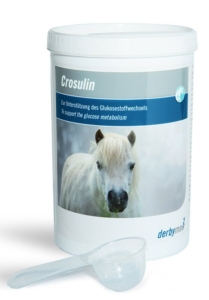
Crosulin is a dietary supplement developed specially for animals with laminitis, EMS and equine cushings disease. This product supports the harmonisation of glucose in the body and consequently reduces disorders like laminitis. It focuses on regulating glucose levels and improving metabolic functions through its blend of chromium, L-carnitine, antioxidants, and selected herbal extracts. This combination is designed to enhance glucose uptake, support energy production, and promote overall equine health, making it a targeted supplement for laminitis and EMS treatment.
For more information go to Crosulin


